Notes on architectural novelties of Ur III
January 15, 2015 – 4:36 pmArchitecture
Ur-Nammu’s determination to display his piety and to repair the damage done by the Guti (or by neglect in the interregnum) showed itself in reconstruction efforts all over Sumer in the name of his god ad of the local gods of the cities. Most elements of the architecture, such as the temples, palaces, houses, canals, etc., are natural developments of those elements as they occurred in earlier periods, and are adequately treated above,[1] but there are certain new forms that are introduced which will be considered below. We can only regret, however, that no traces of the defensive walls built to deter invaders from the north-west have survived, since they were certainly a novelty that would be worth study.
Ziggurats
The kings of Ur (especially Ur-Nammu) are notable for their construction of ziggurats in several cities of their realm, namely Eridu, Ur, Larsa, Uruk, and Nippur. Although the platforms upon which Sumerian temples had been built had become ever larger and more dominant since the Ubaid period, the ziggurats built now seem to have been the first to take the ‘classic’ southern form,[2] consisting of a staged structure on a regular rectangular base with two flights of steps from the side and one flight up the centre of the main face of the structure.
The most impressive example is the ziggurat of Ur, dedicated to Nanna, whose construction was begun by Ur-Nammu and continued by his successors. Its name was é-temen-ní-gùr-ru, ‘the house whose foundation is clad in terror.’ Its platform at its base measures 61m x 45.7m and the first stage is 15m high sloping inwards for stability. It has a mud brick core with a 2.4m casing of baked brick set in bitumen. The layers of brick were supplemented at 6-8 course intervals by thick mats of reeds, possibly for extracting damaging moisture from the core. There were also many drainage pipes from the core for the same reason. Woolley thought that these might have been required to provide drainage for trees that were planted on the sides of the structure, but this is not thought likely by most others.[3] The faces of the stages were decorated with buttress and recesses in the manner typical of most Sumerian temple architecture from as far back as the Ubaid period[4]. It is oriented so that its corners point towards the compass directions, and its step approaches are on the north-east face. All three stairs meet at the top of the first stage below a gatehouse, after which only the central staircase continues. Reconstructions based on representations on seals and reliefs as well as on other examples of the type, indicate that there were actually three stages and a small shrine at the top, but of these nothing but the first stage and some traces of the second remain. When Nebuchadnezzar rebuilt this sacred structure a thousand years later, the shrine was faced with blue glazed bricks, which may or may not tell us something about the original shrine.
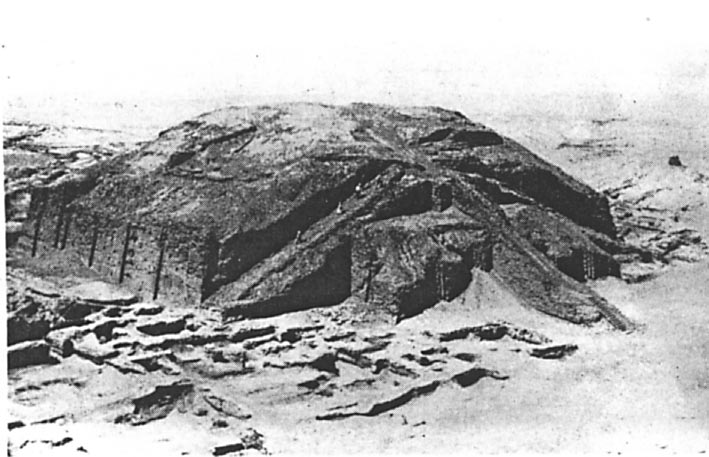
Figure 1: Ur Nammu’s ziggurat at Ur (as it appeared before recent partial restoration)[5]
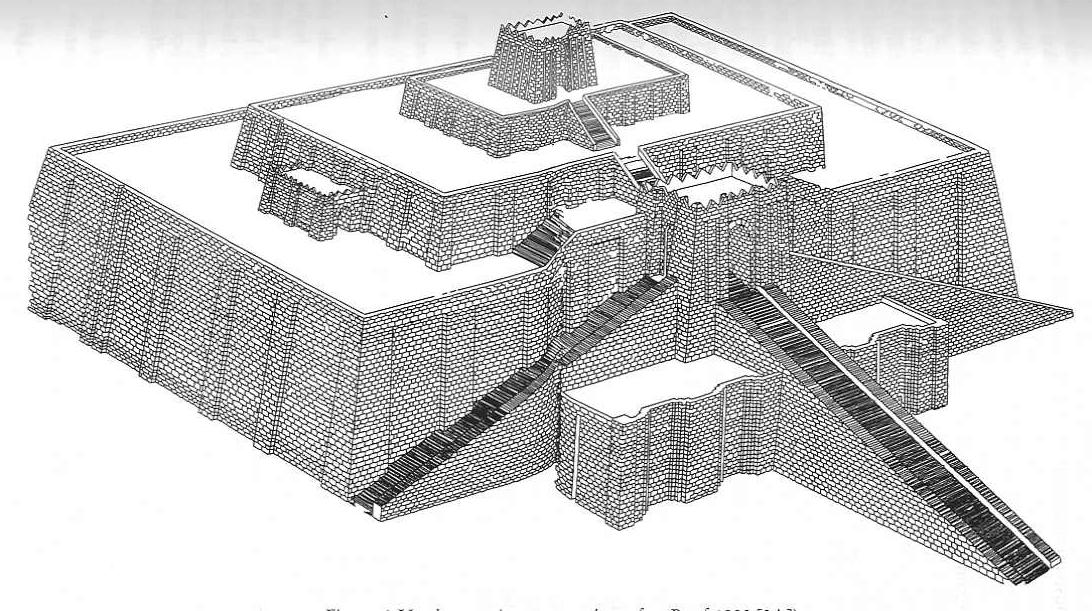
Figure 2: The proposed original form of the ziggurat of Ur.[6]
Mausolea
Spectacular burials of the kings of Ur have already been noticed in the ED period. Now, in a nearby area, the kings of Ur III are once again noticed making spectacular provision for their remains in the form of a series of mausolea for Ur-Nammu, Shulgi, and Amar-Sin. It is extremely rare to find the tombs of Mesopotamian rulers, but what this signifies is not certain. Given that the furnishings of the much more primitive ED tombs proved so exciting, it is unfortunate that these later imperial tombs were looted in antiquity, leaving only traces of gold leaf to suggest the wealth that had been there.
(a) 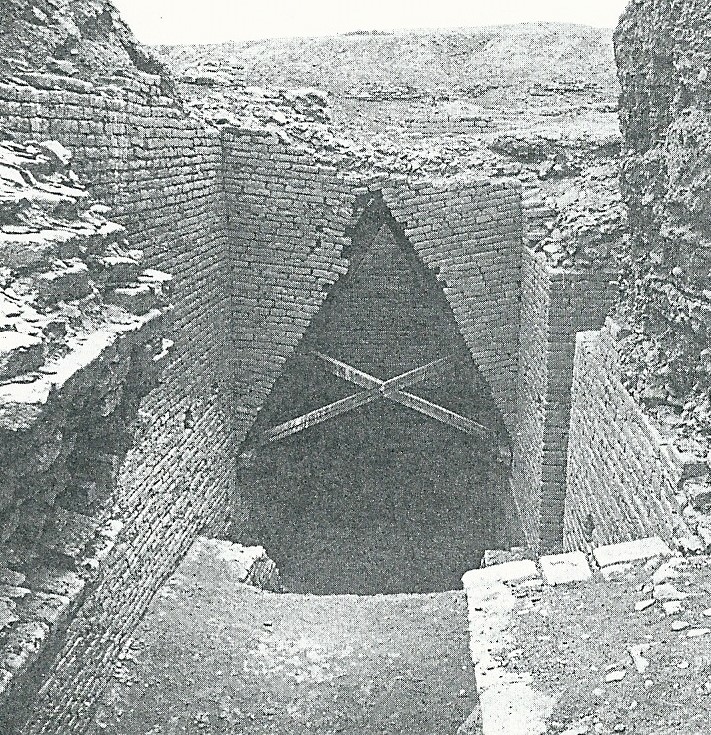 (b)
(b) 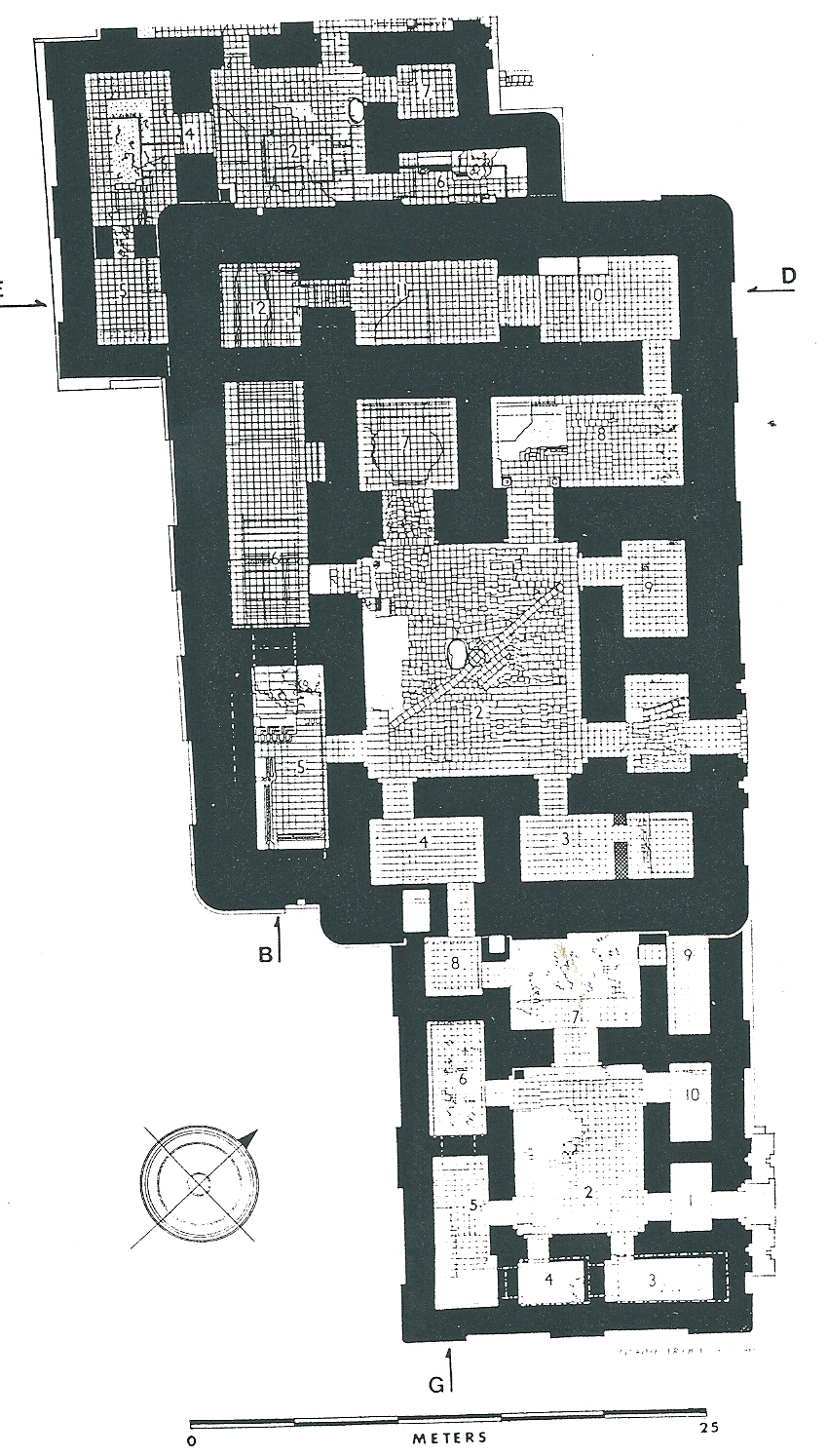
Figure 3: (a) Entrance to a Mausoleum[7] (b) Plan of the Mausolea[8]
The mausolea consist of chambers built below the ground level of the time covered by baked-brick corbel vaulting. They could be reached by steps leading down to a floor of baked brick set in bitumen. Above these chambers were funerary chapels, but these have not been so well preserved. Woolley discovered that a new and lower quality floor had been constructed several metres above the original floor of Ur-Nammu’s tomb, and he proposed that a rising water table had flooded the tomb sometime after the initial construction, making this unsatisfactory alteration necessary in order to provide a surface to receive the king and his treasures.[9]
The Temple Precinct of Ur
The mausolea were then just outside the temple precinct of Ur, which seems to have been the focus of the building efforts in Ur by Ur-Nammu and his heirs. Although it is not an innovation, its interest and importance is such that a brief description is warranted.[10]

Figure 4: The Temenos at
The ziggurat described above was the outstanding structure in a complex of religious and secular structures behind a temenos. The temenos shown in the illustration, however, is the later reconstruction by Nebuchadnezzar. The ziggurat was built upon a terrace and the terrace was surrounded by another wall, which was not a solid structure but consisted of a series of rooms variously connected. In the south-east corner of this wall was a small building called the e-dub-lal-mah, which served as the main entrance to the ziggurat courtyard and as the ‘Seat of Judgement’ for the king. To the northwest of the ziggurat, but within the inner enclosing wall was a shrine to Nanna, Ur-Nammu’s god, Ur’s main god, and the god to whose worship the ziggurat was devoted. Also attached to this wall was a second courtyard with a grand entrance facing away from the ziggurat (so that one would enter facing directly towards it) also dedicated to Nanna.
Outside this connected complex were other buildings, not all of which are understood yet. In the angle between the ziggurat courtyard and the courtyard of Nanna is the e-nun-mah, which may have been a ‘treasury.’ To the southeast was the gi-par-(ku)[12], containing a major shrine to Ningal, the consort of Nanna, and minor shrines to several other gods. It also contained the tombs of some of the priestesses. It was probably the living quarters of the priestess and the administrative centre of the temple complex. To the East of this was the e-hursag, which may have been a royal palace for religious purposes.[13]
‘House-Plan’ Temples
The final innovation to be noted is in the design of temples. From at least the ‘Ubaid period, the standard form of the temple was ‘bent-axis’, in which the main entrance was to the side of the altar[14], but beginning at this period temples adopted the ‘house-plan’ in which the approach to the altar in its sanctuary was direct from a main entrance flanked by towers through antechambers and a courtyard surrounded by rooms with various other functions. The details could vary, but this basic plan was retained henceforth.
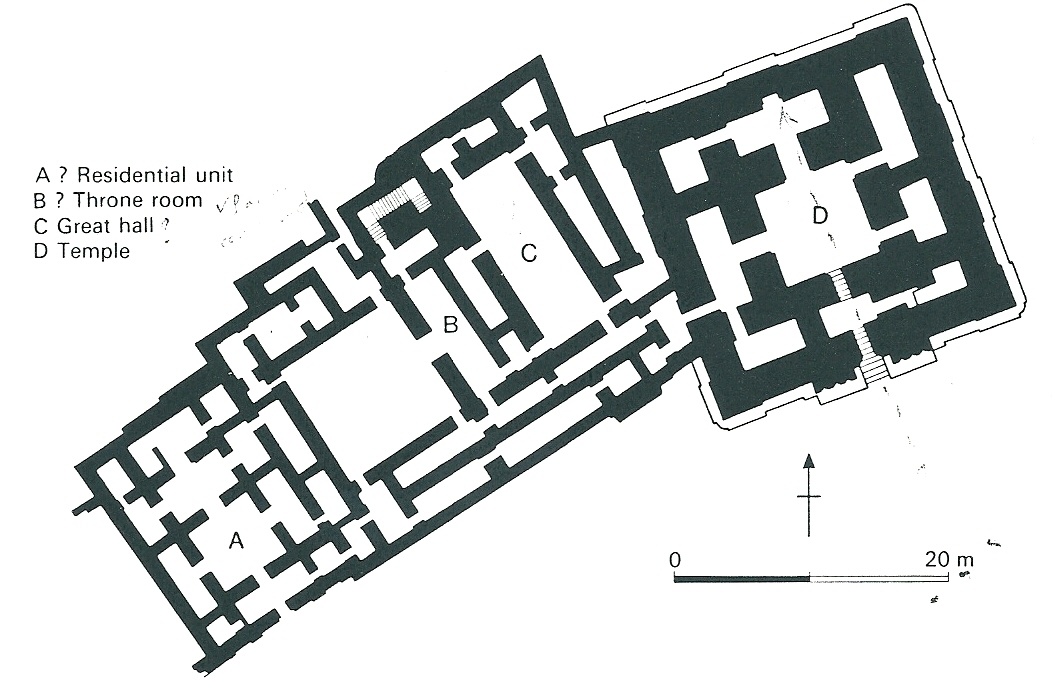
Figure 5: Governor’s Palace and Temple of deified king Shu-Sin in Eshnunna[15]
In the temple illustrated, shown as it appeared at the end of Ur III, there is also the possibility of a bent-axis approach through the adjoining palace. This may represent an intermediate step in the adoption of the ‘house-plan’, with the religious preference for the palace entrance only gradually being overwhelmed by the importance of the street entrance required for the conduct of the temple’s economic business.[16]
[1] Ch. 9.
[2] Nissen, p. 190, Roaf, p. 105.
[3] Leick, pp. 126f. (ref. to Woolley, C.L. (1952) Ur of the Chaldees, Harmondsworth, p.92.)
[4] Frankfort:AAAO4, p. 18.
[5] Frankfort:AAAO, p. 52.
[6] Roaf, pp.104f
[7] Lloyd:AM, p. 154.
[8] Crawford, p. 72.
[9] Lloyd:AM, pp. 153f.
[10] Op. cit., p. 153.
[11] Hawkes:AAA, p. 173.
[12] 9.15
[13] Hawkes:AAA, p. 173
[14] 1.7
[15] Crawford, p.91 (c.f. 9.18.)
[16] Frankfort:AAAO4, p. 106
Tags:
2 Responses to “Notes on architectural novelties of Ur III”
The mausolea and the ED Royal tombs of Ur would appear in the bottom of figure 4, but it appears to have suffered from bit-rot and I can’t be bovvered fixing it. Look at my face. Am I bovvered.
By SteveGW on Jan 15, 2015
PRS Moorey (1984) ‘Where Did They Bury the Kings of the IIIrd Dynasty of Ur’ Iraq 46:1-18 argues that these are not in fact mausolea of the kings but are tombs of persons somehow privileged by their roles in the temple cult. He makes a similar claim about the EDIIIa ‘Royal Burials’ also discovered and interpreted by Woolley nearby.
By SteveGW on Feb 23, 2015