Poussin – Et in Arcadia Ego
March 23, 2019 – 9:19 pmAccording to Actual Intentionalism, an artwork should be considered as a type of communication by the artist, and the ‘meaning’ of the artwork – which is what is to be understood by an interpretation of the artwork – is just what its author intended when creating it. There is supposedly an analogy to be made to more straightforward communications like common speech; according to which, to understand what someone has said is to interpret it in such a way as to retrieve its meaning, and the meaning of what a person says is just what they wanted to get across to their audience when they spoke. Analogies to the understanding of common speech will prove to be very useful and we shall recur to them often.
In fact, the principal objection to AI can be motivated by observing that the supposed analogy assumes that the speaker has succeeded in their intention, whereas we know from our own experience that sometimes a speaker may fail to say just what they mean. Similarly, where the actual intentionalist makes the same assumption with respect to an artist’s intentions and their artworks, we recognise the possibility that an artist may fail to make good on their intentions in creating an artwork.
We can see that this has happened, for example, in Poussin’s Et in Arcadia Ego.
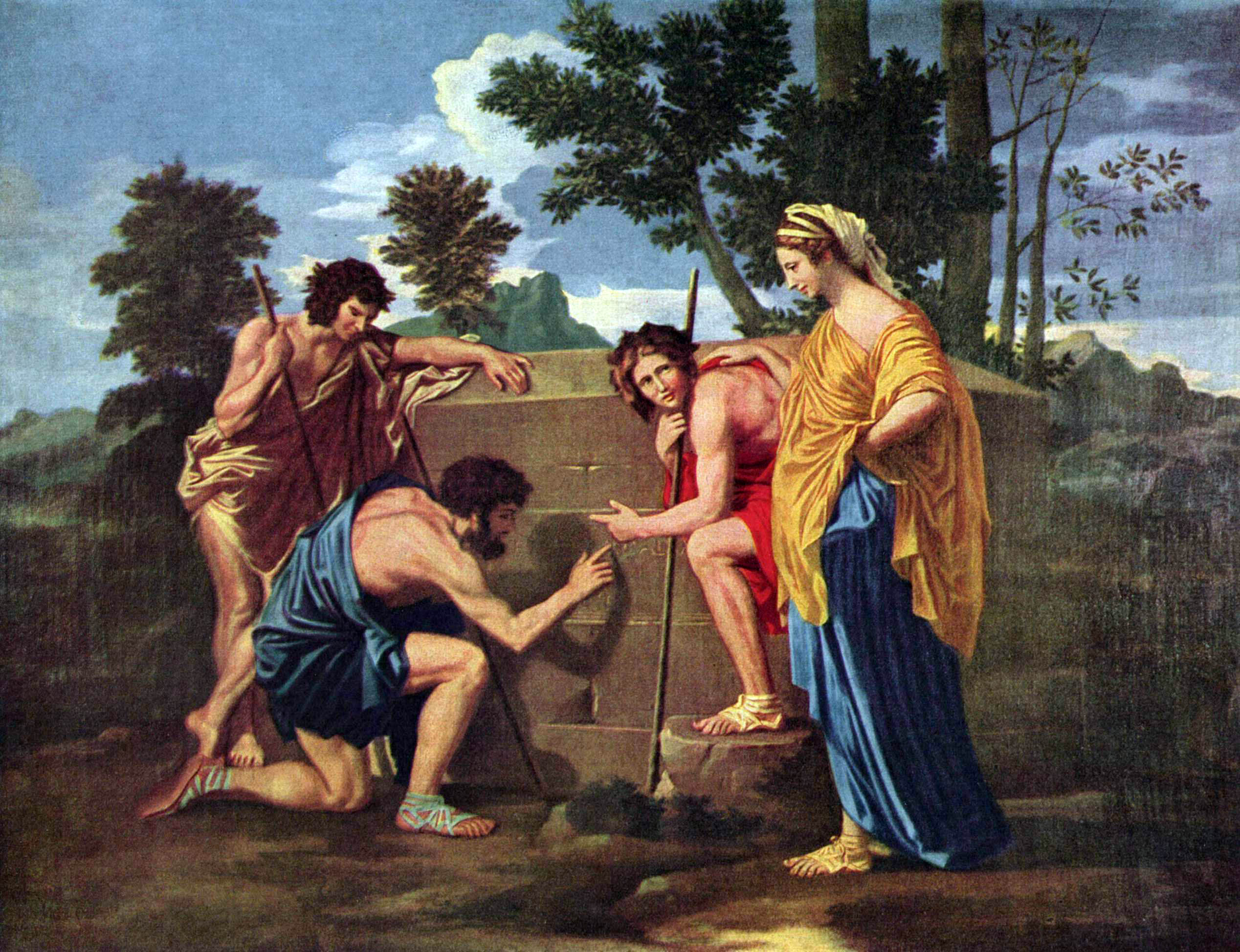
In this painting (also known as the Bergers d’Arcadie) three shepherds and a woman gather about a sarcophagus to remark upon the inscription they can see on it, which reads as in the title. It is now generally agreed that the painting is a kind of memento mori (“reminder you will die!”) and the inscription should be understood as “Even in Arcadia, there am I” meaning that even in an Earthly paradise, there is Death. This interpretation, however, was not always obvious to all, because the inscription is written upon the sarcophagus and the usual interpretation of such things is that they are being said by the person entombed therein. Thus, the Latin was tortured a little to give the meaning “I too lived in Arcadia” and signified only that others had preceded them in enjoying these delights. Eventually it came to signify no more than a kind of nostalgia for happiness now past. (Panofsky, E. & G. (1968) ‘The “Tomb in Arcady” at the “Fin-de-Siècle”’ Wallraf-Richartz-Jahrbuch, 30, pp. 287–304.) Goethe used a German form of it, for example, as the motto for his book of fond recollections of his Italian Journey.
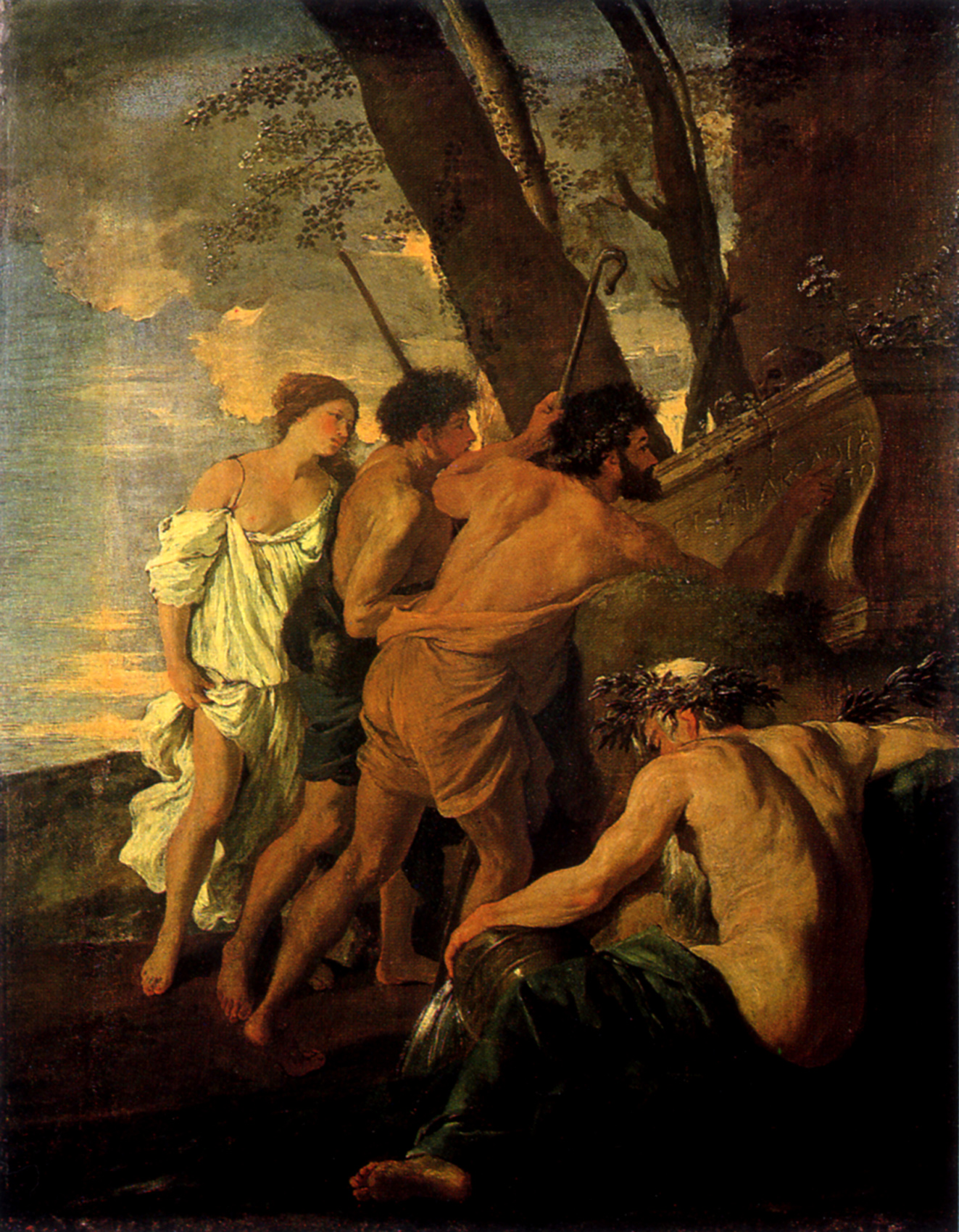
In order to arrive at the now-accepted interpretation it was necessary to trace the history of the painting’s theme through earlier versions. The famous version by Poussin was painted in 1637/8, but he also did a slightly different one in 1627 in which the sarcophagus bearing the inscription also has a barely visible skull on its top.
This painting in turn seems to have been inspired by a much more obvious painting by Guercino dated to somewhere about 1618-22 in which two shepherds ponder a skull atop an ancient masonry pedestal on which is inscribed the famous phrase.
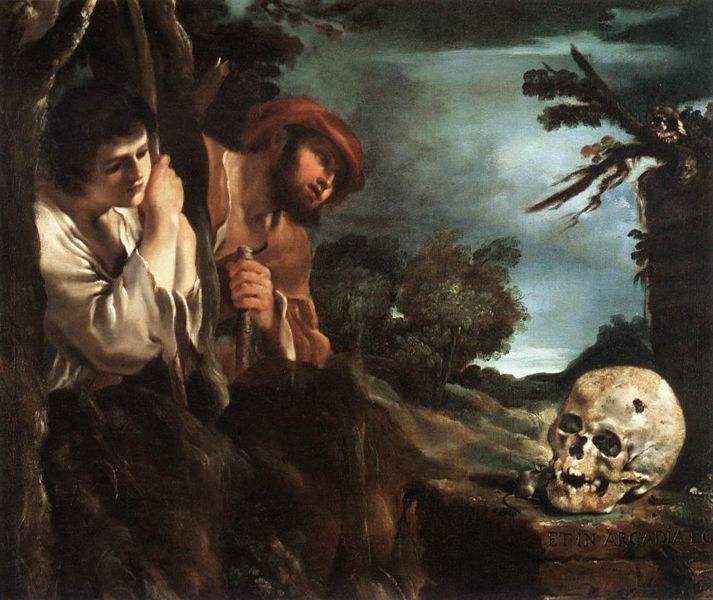
In this context it is clear that the phrase is to be understood as spoken on behalf of the skull, which is the iconographic symbol of Death (it is still called a ‘death’s head,’) and thus makes sense of the more natural reading of the Latin. Poussin, in altering the pedestal to a sarcophagus and then removing the skull altogether, so violated the then-current norms of iconography that the original intention was no longer unambiguously derivable from the image itself.
The critic of AI will now say that the meaning of the painting cannot be the ‘remember death’ that Poussin intended, but, if anything, the ‘nostalgic for Arcadia’ that the painting’s earlier public understood. If the critic nevertheless continues to accept that in cases where the artist is successful in his efforts his intentions should determine the meaning of his artwork, then we might say that the critic is a Moderate Intentionalist.
Returning to our analogy, however, we should note that the moderate intentionalist approach doesn’t actually agree very well with our general attitudes to interpreting common speech. In the case of speech, if someone misspeaks or otherwise fails to say just what they mean, we do not simply write off their intentions as no longer relevant, instead we try to discover what they did mean despite what they said. This is an essential principle of charitable interpretation. It will then be a matter of dispute whether you wish to say that their utterance really had the meaning they intended or had none or had some other meaning that could be discovered using the usual (non-intention-seeking) rules for understanding speech. It’s worth noting, however, that in the case of the Poussin painting, the artist’s intention as newly established has pretty much displaced the earlier alternative interpretation as giving the painting’s meaning, so that the verdict of the art public here seems to favour the stricter AI claim.
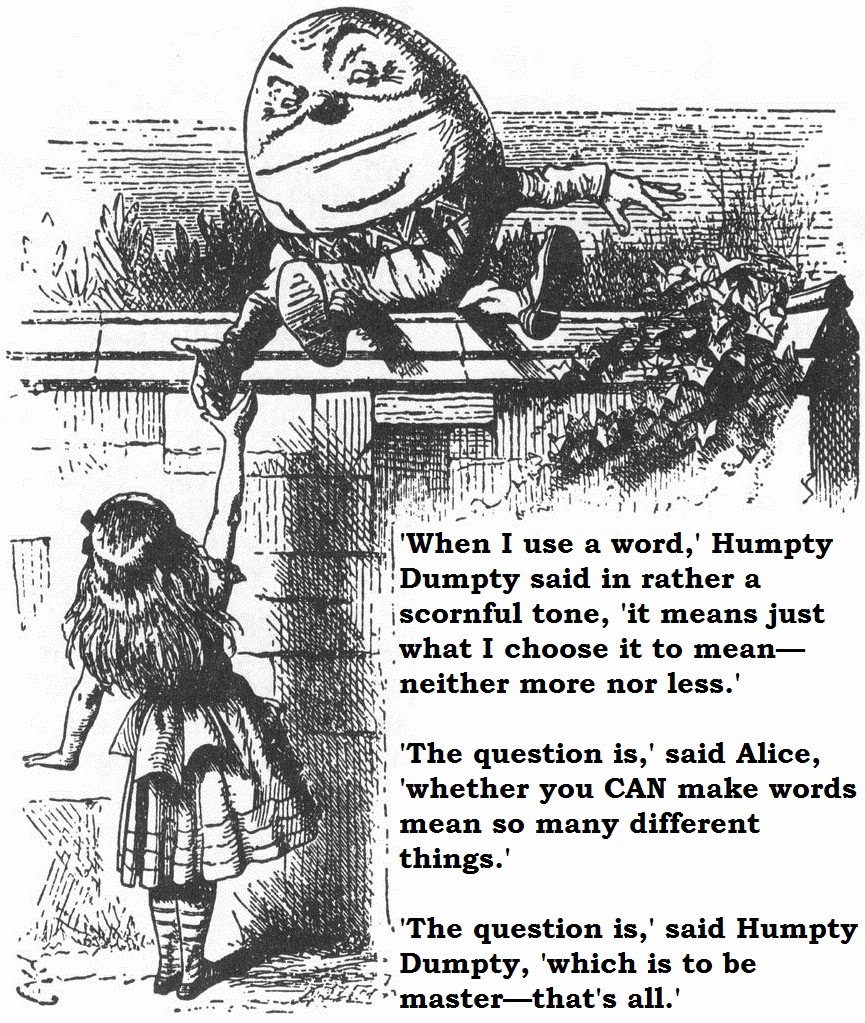
At this point we might also note the exchange between Humpty Dumpty and Alice Through the Looking Glass
Tags: